Ventilation: a complete guide for your home (2026)
Last updated:
Ventilation replaces used indoor air with fresh outdoor air. Good ventilation keeps CO₂ below 1000 ppm and relative humidity between 30–60%, helping prevent mould, stuffiness and condensation on windows. In a modern Estonian home this usually means mechanical ventilation with heat recovery, which also reduces heating costs.
This guide covers ventilation system types, unit selection, requirements, prices in 2026, installation and maintenance. It was written by the KoduVent team, with over 500 ventilation installations across Estonia.
Quick answers
| Question | Short answer |
|---|---|
| Which ventilation suits a house? | Centralised supply and extract ventilation with heat recovery |
| Which suits an apartment? | A compact heat recovery unit or decentralised units where ducts will not fit |
| What does house ventilation cost? | Usually €5,500–9,500 including installation and VAT |
| How much heat is recovered? | 75–90% of the heat in the outgoing air |
| How often should filters be replaced? | Twice a year; more often in dusty environments |
Why is ventilation necessary?
People spend about 90% of their time indoors. A person releases roughly a litre of water into the air daily, as well as CO₂. Without air exchange this can cause:
- Stuffiness and headaches – bedroom CO₂ can easily exceed 2000 ppm overnight.
- Moisture and mould – condensation appears on windows and mould in corners.
- Poor sleep and concentration – insufficient fresh air contributes to tiredness.
- Allergens and dust – unfiltered air carries pollen and fine particles.
- Building damage – moisture damages structures and insulation.
Modern homes are airtight. This saves energy, but means the house cannot simply “breathe by itself”. Opening windows in winter cools rooms and wastes heat, and nobody ventilates them all night.
Types of ventilation systems
1. Natural ventilation
Temperature and pressure differences move air through shafts and fresh-air vents. Common in older houses and Soviet-era apartment buildings. Advantages: inexpensive, quiet and no electricity required. Disadvantages: weak in summer, excessive and cold in winter, and all the heat escapes.
2. Mechanical extract ventilation
A fan extracts air from the kitchen, bathroom and WC; fresh air enters through window vents. This is an affordable renovation option, but incoming winter air is cold and heat is lost.
3. Supply and extract ventilation with heat recovery
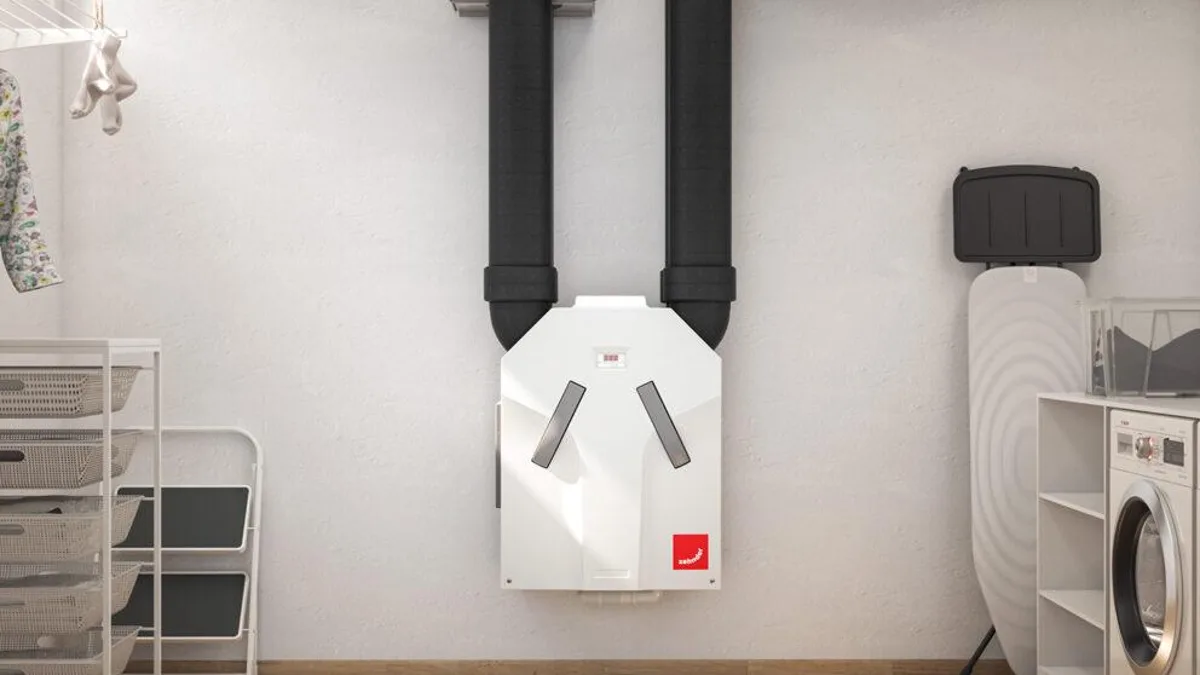
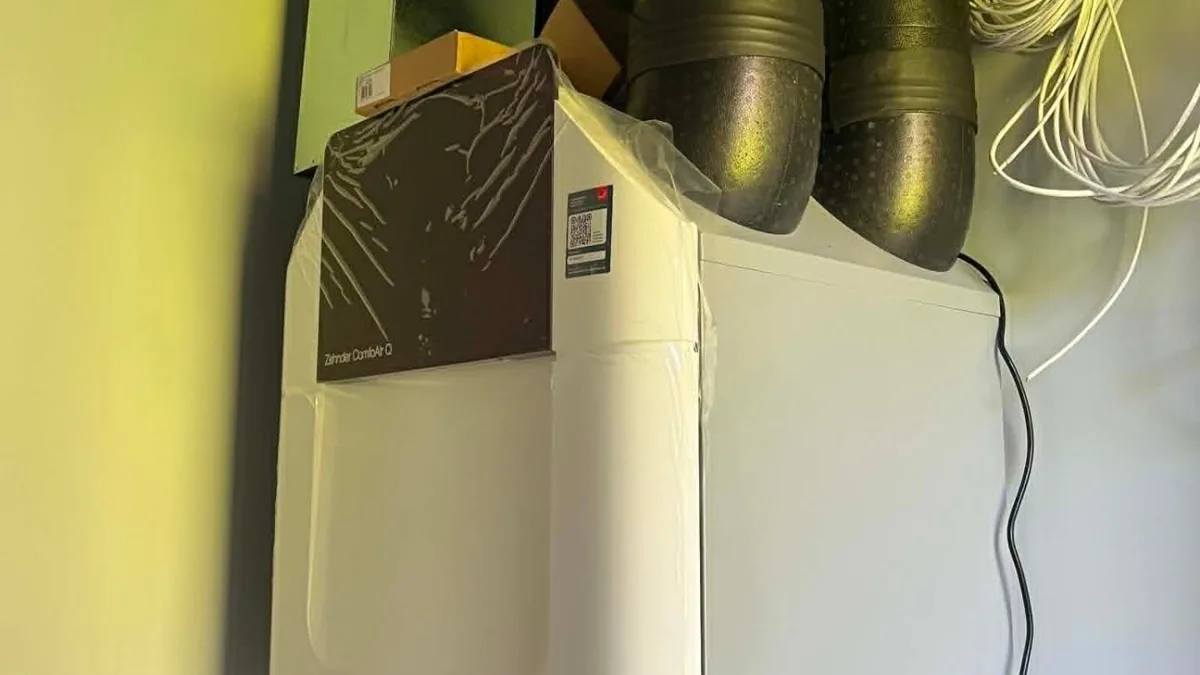
A unit supplies filtered fresh air to living rooms and bedrooms and extracts used air from the kitchen, bathroom and WC. A heat exchanger transfers heat from outgoing warm air to incoming cold air without mixing the air streams. It is a common and recommended solution for new builds and major renovations in Estonia. Read how heat recovery ventilation works.
4. Decentralised ventilation
Small heat recovery units are installed in each room's external wall, without ducts. Suitable for apartments and renovations with limited space. Advantages: quick installation. Disadvantages: lower efficiency, more noise inside rooms and separate maintenance for every unit.
| Type | Heat recovery | Price level | Suitable for |
|---|---|---|---|
| Natural | None | Low | Older buildings |
| Mechanical extract | None, except with a heat pump | Low–medium | Apartment building renovation |
| Centralised heat recovery | 75–90% | Medium–high | Houses, terraced homes, larger apartments |
| Decentralised | 60–85% | Medium | Apartments and individual rooms |
What makes up a ventilation system?
- Ventilation unit – fans, heat exchanger, filters and controls in one housing.
- Outdoor intake and exhaust openings – correctly spaced on a wall or roof to prevent used air from re-entering.
- Main ducts and silencers – keep noise away from bedrooms.
- Distribution manifolds and plastic ducts – modern Ø75–90 mm air distribution is quick to install and easy to clean.
- Supply and extract valves – regulate airflow in each room.
- Control panel and sensors – CO₂, humidity and temperature sensors adjust operation to demand.
How to choose a ventilation unit
Airflow
A typical home needs approximately 0.4–0.5 l/s per square metre of floor area. A 150 m² house needs about 60–75 l/s, or 220–270 m³/h. Typical room values:
| Room | Typical airflow |
|---|---|
| Bedroom, supply | 8–12 l/s |
| Living room, supply | 10–20 l/s |
| Bathroom, extract | 15 l/s |
| WC, extract | 10 l/s |
| Kitchen, basic extract | 8–10 l/s, plus a separate cooker hood |
A ventilation design determines the precise airflow using EVS-EN 16798-1 and its Estonian national annex.
Unit size
Choose a unit whose normal operating point is 50–70% of maximum capacity. It will be quieter, more efficient and more durable. Check the manufacturer's airflow curve at 100–150 Pa static pressure, not just the advertised maximum.
Heat exchanger type
- Counterflow plate exchanger – 75–90% recovery, separate air streams and easy maintenance. A good choice for most homes.
- Rotary exchanger – up to about 85% recovery, also returning moisture to reduce winter dryness. Requires belt and rotor maintenance.
- Enthalpy exchanger – plate exchanger benefits plus moisture recovery.
Noise, electricity and controls
Bedroom noise should stay below 25–30 dB. Compare SFP, the specific fan power: lower values mean lower electricity bills. A quality home unit uses roughly as much electricity annually as a refrigerator. CO₂ and humidity controls increase airflow only when needed.
Brands
KoduVent installs Komfovent, Zehnder, Flexit, Systemair and BSK units. Each has strengths: Komfovent offers good value, while Zehnder offers quiet and Passive House-certified units. Browse products.
Ventilation for houses and apartment buildings
- Houses and terraced homes – centralised heat recovery, with a unit in a utility room or attic. Plan ducts early in new builds. Read about house ventilation.
- Apartments – compact ceiling units or decentralised units. Agree façade openings with the association first. See apartment ventilation.
- Apartment buildings – individual apartment units or a central rooftop unit when renovating. See apartment building ventilation.
- Commercial buildings – larger units and mandatory design. See commercial ventilation.
Requirements and legislation in Estonia
New buildings must meet energy efficiency and indoor climate requirements, so new houses almost always use mechanical heat recovery ventilation. Residential requirements specify natural or mechanical ventilation sufficient for normal living. Adding ventilation to an existing house is not always mandatory, but renovation support schemes usually require modernising it.
Grants: EIS, formerly KredEx, administers state renovation support. In 2026 much of the EU funding has been allocated; check new application rounds at eis.ee.
What does ventilation cost in 2026?
Prices depend on floor area, unit quality, duct type and whether the property is new or being renovated. These indicative prices include the unit, materials, installation and VAT.
| Property or service | Indicative price |
|---|---|
| Apartment up to 80 m² | €3,500–5,500 |
| House / terraced home, 100–150 m² | €5,500–7,500 |
| House, 150–250 m² | €7,000–9,500 |
| House over 250 m² | From €9,500 |
| Ventilation design | From €300 |
| Maintenance, filters and inspection | From €120 |
See our price list or request a free quote for an exact price. Read the 2026 ventilation installation price analysis.
Payback: heat recovery reduces ventilation heat loss by 75–90%. Payback is usually faster with direct electric or gas heating than with a heat pump. Alongside savings, you gain a healthier indoor climate.
How installation works
- Consultation and survey – review the property and plan unit and duct locations.
- Design – calculate airflow and choose the unit. Ventilation design.
- Quote – agree a fixed price and schedule.
- Installation – typically two days for a house with plastic ducts, around three with metal ducts. Ventilation installation.
- Adjustment and measurement – measure each room and balance the system. Airflow measurement.
- Handover – explain operation and maintenance.
Common mistakes
- An undersized unit running at maximum capacity and making excessive noise.
- Missing silencers, allowing noise to reach bedrooms through ducts.
- An unbalanced system with incorrect room airflow.
- No air gap under internal doors, typically around 1–2 cm.
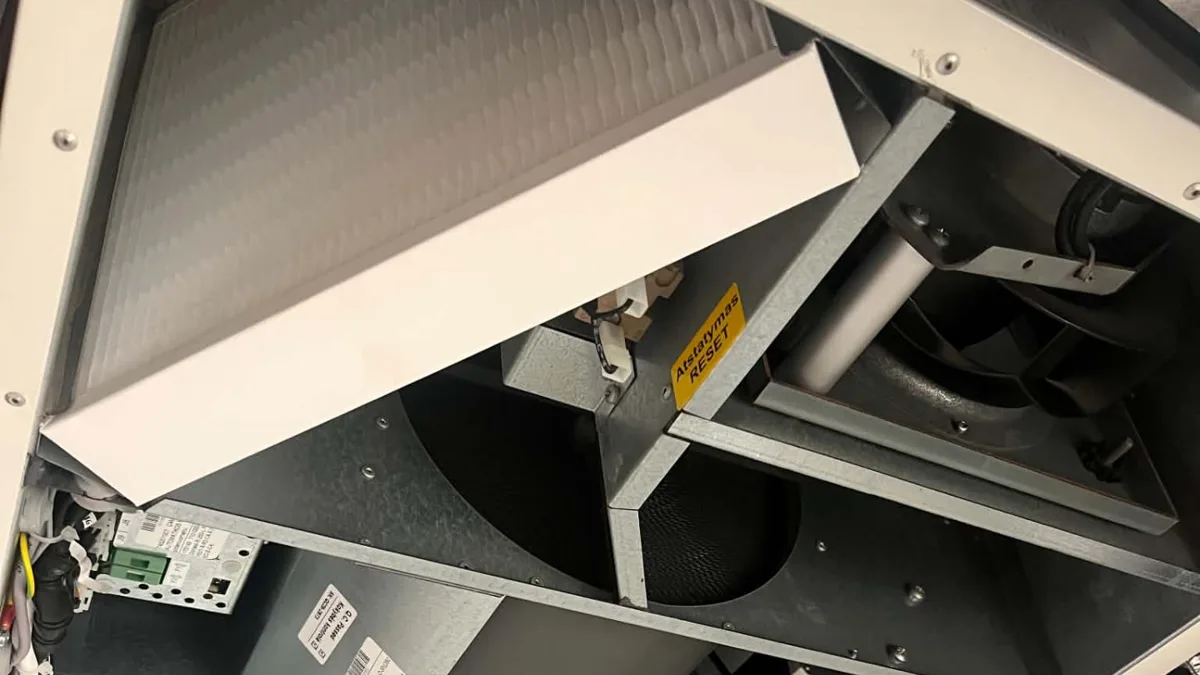
- A cooker hood connected to the ventilation unit, allowing grease to damage the exchanger.
- Outdoor intake and exhaust openings too close together.
Ventilation maintenance
| Work | Frequency |
|---|---|
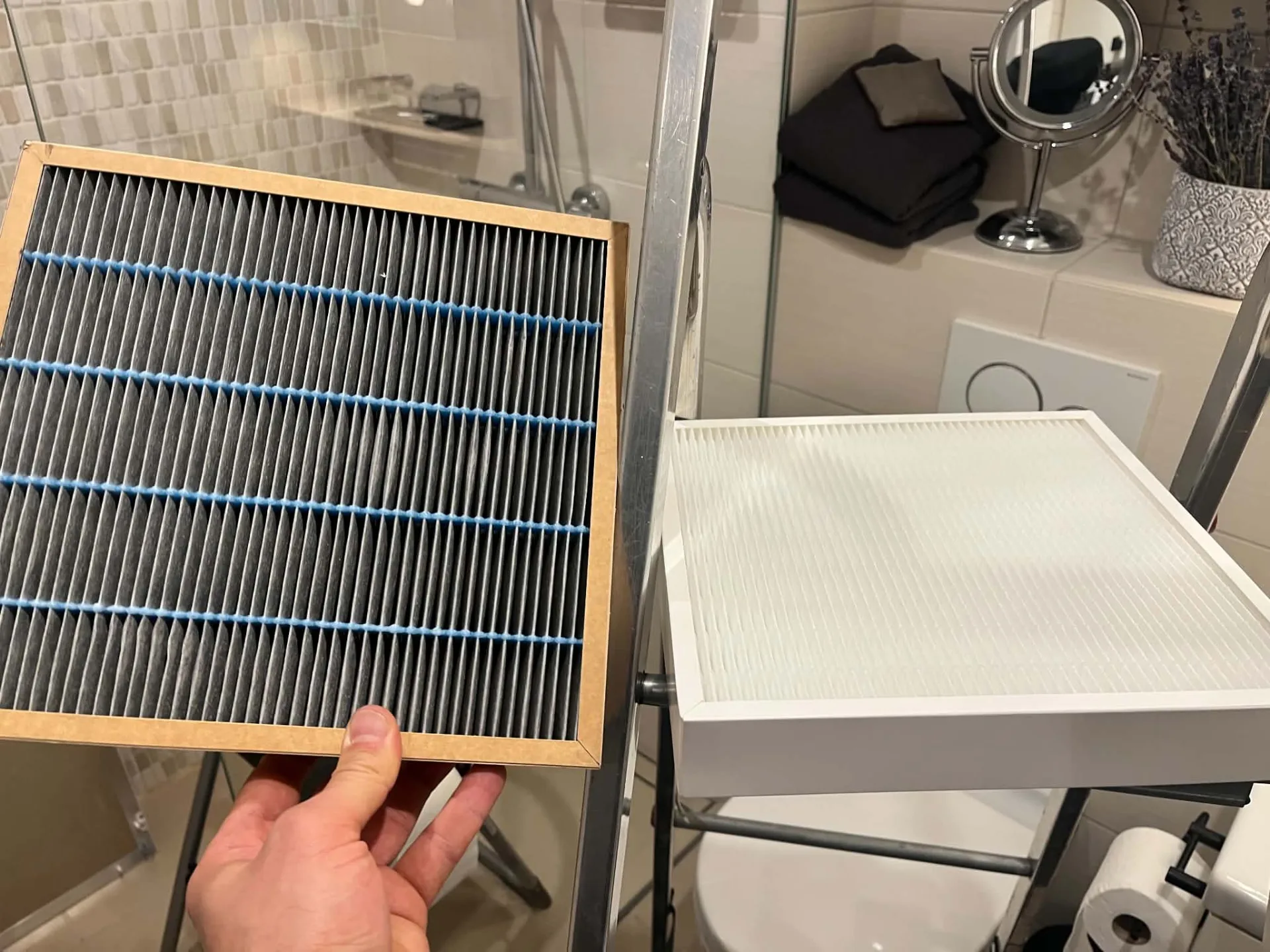
| Filter replacement | Twice yearly, spring and autumn |
| Heat exchanger cleaning | Once a year |
| Valve and outdoor grille cleaning | Once a year |
| Duct cleaning | Every 5–10 years |
| General unit inspection | Once a year |
Clogged filters increase electricity use and reduce airflow. Order ventilation maintenance or ventilation cleaning; filters are also available from ventilatsioonifiltrid.ee.
Frequently asked questions
1. What is ventilation?
Ventilation replaces indoor air with fresh outdoor air to remove CO₂, moisture, odours and pollutants.
2. Is opening windows enough?
No. It is irregular, wastes heat in winter and does not continue overnight. Ventilation works continuously.
3. How do natural and mechanical ventilation differ?
Natural ventilation depends on weather; mechanical ventilation uses fans to ensure airflow throughout the year.
4. Does cold air enter in winter?
A quality heat recovery unit usually supplies air at 16–20 °C in winter. A post-heater can be added if needed.
5. Is ventilation noisy?
A properly designed system with silencers stays below 25–30 dB in bedrooms and is practically inaudible.
6. How much electricity does ventilation use?
A home unit uses roughly as much annually as a refrigerator. Heat recovery saves several times that amount of heating energy.
7. What does house ventilation cost?
Usually €5,500–9,500 including the unit and installation, depending on house size and equipment.
8. Can it be installed in an existing house?
Yes. Plastic ducts fit above suspended ceilings, in attics or cupboards. Decentralised units suit homes without duct space.
9. Should ventilation run when nobody is home?
Yes, at low speed, preventing moisture accumulation and extending unit life.
10. Does ventilation help prevent mould?
Yes. Continuous air exchange helps keep humidity at 30–60%, reducing mould and window condensation.
11. How often should filters be replaced?
Usually twice a year; more often near busy roads or for allergy sufferers.
12. How long does installation take?
Typically 2–3 working days in a house and 1–2 days in an apartment.
Summary
Good ventilation underpins a healthy home: fresh air, balanced humidity, lower heating costs and a protected building. For most Estonian homes, properly designed, balanced and maintained mechanical heat recovery ventilation is the best choice.
KoduVent has completed over 500 ventilation installations across Estonia. Request a free quote – we reply within 24 hours, or call +372 588 22 446.