Heat recovery ventilation – how does it work and is it worth it?
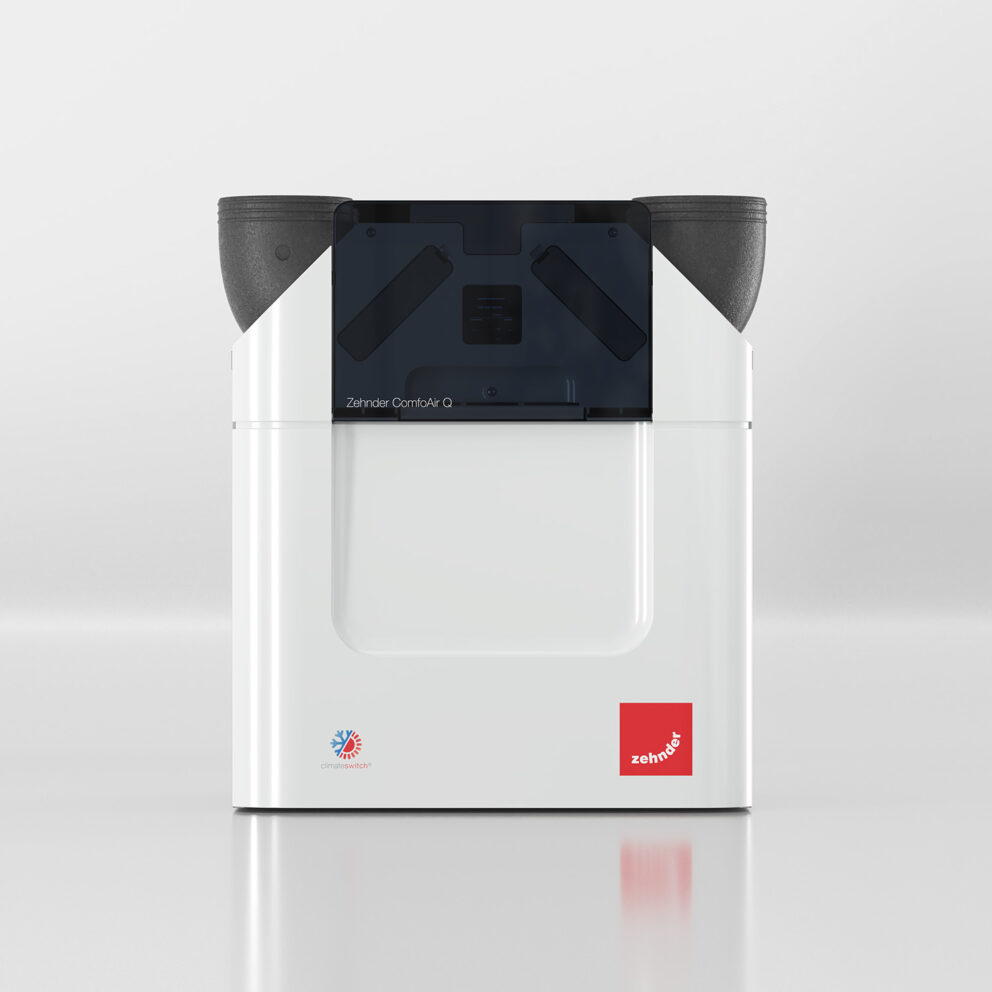
Heat recovery ventilation, or a ventilation unit, is the heart of today's energy-efficient home. It brings fresh air into the building, expels stale air, and simultaneously transfers up to 95% of the heat back into the incoming air. The result: fresh, filtered air without energy wasted on heating.
What is heat recovery ventilation?
It is a balanced mechanical ventilation system where one fan pushes fresh outdoor air into rooms, and another removes humid and polluted air from wet rooms (kitchen, bathroom, WC). Between the two airflows is a heat exchanger, which transfers heat from the extracted air to the incoming air — the airflows themselves do not mix.
Unlike natural ventilation or simple exhaust, a ventilation unit provides controlled air exchange 24/7 and operates silently in the background. In the Estonian climate, where the heating season lasts almost 7 months, this solution has become the standard for new developments and energy renovations.
How does a heat exchanger work?
The heat exchanger is the heart of the ventilation unit. Its task is to allow heat to move between two airflows without the air mixing or odors transferring. Two main technologies are used in the Estonian market:
1. Plate heat exchanger (cross-flow or counter-flow)
- Principle of operation: two airflows move between thin aluminum or polymer plates. Heat is conducted through the plate.
- Efficiency: 70–93% (up to 95% for counter-flow models).
- Humidity: does not transfer humidity (enthalpy models do this too).
- Advantage: simple construction, few moving parts, long lifespan.
- Disadvantage: can freeze on cold days — requires pre-heating or defrosting mode.
2. Rotary heat exchanger
- Principle of operation: a slowly rotating aluminum wheel "collects" heat from the exhaust air and transfers it to the incoming air on the other side.
- Efficiency: 75–88%.
- Humidity: partially transfers humidity, which keeps the indoor climate less dry in winter.
- Advantage: does not freeze, tolerates the Estonian climate well.
- Disadvantage: moving parts, requires periodic maintenance, and may leak a small amount of air.
Efficiency: what does 65% vs 95% mean?
Efficiency indicates how much of the heat from the exhaust air the unit recovers. 90% efficiency means that if it's -10 °C outside and +21 °C inside, the incoming fresh air warms up to almost +18 °C in the heat exchanger — the heating system only needs to bridge a 3-degree difference.
An a- or A+ class house with an Estonian energy label typically requires a ventilation unit with an efficiency of at least 80%. Komfovent Domekt, Vallox 145/245, and Flexit Nordic series models mostly range from 85–94%.
How much can you save?
The heating energy requirement for a typical 150 m² private house is 12,000–18,000 kWh per year. Heat loss related to ventilation accounts for about 30–45% of this, or 4,000–7,500 kWh.
If the ventilation unit's efficiency is 85%, you save almost 85% of this — which is 3,400–6,400 kWh per year. At the electricity price for a heat pump (about €0.12/kWh, COP 3), this means €140–260 annually; for direct heating (gas, electric heating), it's €400–900 annually.
Who is it suitable for?
- New constructions — from energy class B, a ventilation unit is de facto mandatory.
- Energy renovations — if the house is insulated and windows are new, air exchange deteriorates drastically; without a ventilation unit, condensation and mold will form.
- Allergy sufferers and families with small children — F7/F9 filters remove pollen and fine particles.
- Apartments — compact ceiling-mounted models available (e.g., Komfovent Domekt R 200).
Price range in 2026
The price of a fully installed system depends on the size of the house, the complexity of the ducts, and the class of the unit. Practical ranges:
- Apartment 50–80 m² — €2,500–€4,500
- Private house up to 150 m² — €4,000–€6,500
- Private house 150–250 m² — €6,500–€9,000
- Large house (250+ m²) or double unit — from €9,000
Detailed service prices can be found in the price list, and we also recommend consulting the 2026 installation price analysis.
Payback period
The payback period for heat recovery ventilation depends on the type of heating:
- Direct heating (electric, gas) — 7–12 years.
- Heat pump — 15–25 years (here the main benefit is indoor climate, not financial gain).
- Pellet heating — 10–18 years.
In addition to financial savings, the house's energy rating improves (important for resale), the risk of mold disappears, and the indoor climate demonstrably improves. KredEx often offers energy renovation support, which can halve the payback period.
Common questions
Won't the incoming air still be cold in winter?
No. In a unit with 85% efficiency, the air warms up almost to room temperature already in the heat exchanger. The pre-heater ensures that no condensation or freezing occurs in very cold weather (below -15 °C).
Is internal noise an issue?
Quality models operate at 26–35 dB, which is like a whisper. Properly installed silencers keep duct noise below 25 dB.
What maintenance is needed?
Filters should be changed twice a year, and the heat exchanger cleaned once a year. Detailed procedures can be found in the article "Ventilation cleaning — when and how often?".
Summary
Heat recovery ventilation is the foundation of energy-efficient living in the Estonian climate. It provides controlled fresh air, reduces humidity, and saves 30-50% on heating costs. At 2026 price levels, the payback period for private houses is 7–15 years, while the indoor climate improves from day one.
If you are planning a new house, an energy renovation, or considering a ventilation unit for an apartment, please review the terms of our installation service and design service or request a free consultation.
KoduVent
Koduvent is an Estonian ventilation company that has installed, maintained and designed ventilation systems for thousands of homes, apartments and commercial buildings over more than 20 years.
Request a free consultation
We will help you choose the best ventilation solution for your building — we reply within 24h.