Ventilation cleaning — when and how often?
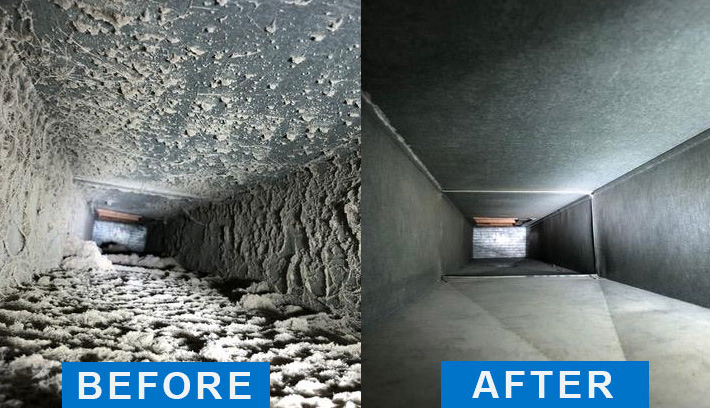
Ventilation ducts require periodic cleaning — every 3–5 years in private homes, and often once a year in commercial buildings and eateries. Dirty ducts reduce airflow, worsen indoor climate, and can pose a fire hazard (especially kitchen ducts).
Why clean ventilation?
- Indoor climate quality — dust, pollen, and bacteria accumulate in ducts and spread into rooms daily.
- Energy consumption — dirty filters and ducts force the fan to operate at 30–60% higher capacity.
- Fire safety — grease accumulating in kitchen hoods is a major fire hazard (mandatory cleaning 1–2 times a year in catering facilities).
- Device lifespan — a dirty ventilation unit depreciates faster, and heat exchanger efficiency decreases.
- Warranty — most manufacturers require regular maintenance for warranty validity.
Recommended cleaning intervals
| Building type | Ducts | Filters | Unit |
|---|---|---|---|
| Apartment | 5 years | 2× a year | 1× a year |
| Private house | 3–5 years | 2× a year | 1× a year |
| Apartment building | 5 years | 2–4× a year | 2× a year |
| Office | 3 years | 2–4× a year | 1–2× a year |
| Catering (kitchen) | 1× a year | every 1–3 months | 2× a year |
| Industry | 1–2× a year | every 1–2 months | 4× a year |
Signs that cleaning is necessary
- Dust or dark discoloration around the grille
- Reduced airflow (mirror steams up)
- Persistent odors
- Increased electricity consumption for the fan
- Whistling or vibrating sound from the ducts
- Separate: fire hazard in kitchen ducts
How does cleaning work?
- Inspection and video inspection. A camera-equipped probe is inserted into the duct to assess dirt levels and determine which technologies to use.
- Mechanical cleaning. Devices with rotating brushes remove accumulated layers from the walls. Particularly greasy kitchen ducts are cleaned manually with chemical washing.
- Vacuum collector. An industrial vacuum cleaner with a HEPA filter collects the dirt – it does not spread into the rooms.
- Filter replacement. The old filter is discarded, and a new one (F7/F9 or according to the project) is installed.
- Heat exchanger cleaning. The plate heat exchanger is removed and washed, the rotary heat exchanger is cleaned on-site.
- Airflow measurement. After cleaning, we measure the airflows and tune the device.
- Protocol. You will receive a written protocol — important for warranty and insurance.
Prices 2026
- Apartment — 180–350 €
- Private house — 450–900 €
- Video inspection — starting from 80 €
- Fire damper inspection — object-specific
- Annual maintenance package (private house) — starting from 149 €/year
A detailed price list can be found on a separate page.
Can I clean it myself?
Simpler tasks — washing grilles, changing filters — are manageable for any owner. Change the filter twice a year (in spring and autumn) and wash the grilles with warm soapy water.
However, deep cleaning of ducts requires special equipment: a rotating brush (on a 10–30 m hose), a HEPA vacuum cleaner, a camera. Without these, dirt remains in the duct and may even get into the room. We recommend ordering duct cleaning from a professional.
Summary
Regular cleaning keeps your ventilation system efficient, indoor climate healthy, and energy consumption under control. For private homes, we recommend cleaning every 3–5 years and annual maintenance with filter replacement.
Familiarize yourself with the cleaning service, view maintenance packages, or request a free consultation.
KoduVent
Koduvent is an Estonian ventilation company that has installed, maintained and designed ventilation systems for thousands of homes, apartments and commercial buildings over more than 20 years.
Request a free consultation
We will help you choose the best ventilation solution for your building — we reply within 24h.