Home Ventilation: The Complete Guide 2026
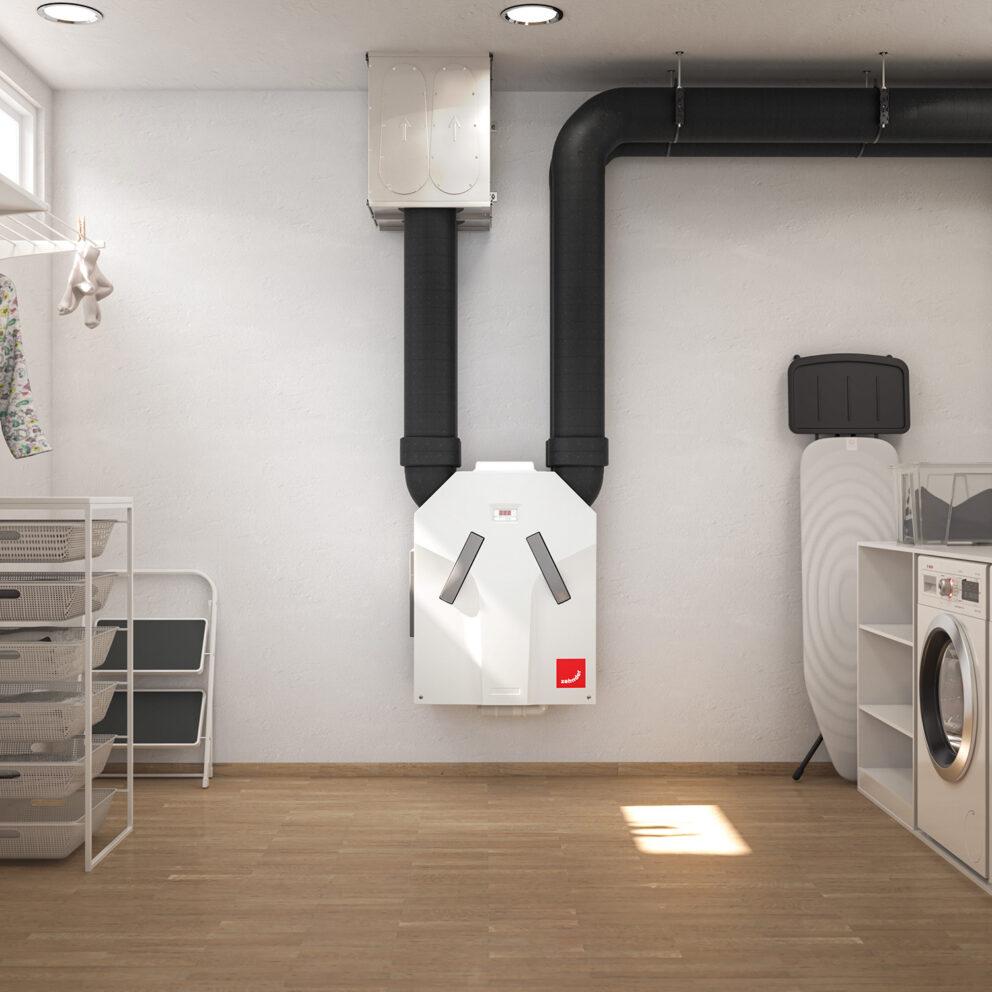
People spend over 90% of their time indoors, yet the air we breathe at home is often several times more polluted than outdoor air. This is precisely why ventilation is one of the most important – and often underestimated – components of a healthy home. In this guide, we will simply explain how ventilation works, what solutions are used in Estonia, and what a proper system costs.
What is ventilation and why is it needed?
Ventilation means bringing fresh outside air into rooms and removing stale air. Good air exchange removes excess moisture, carbon dioxide, odors, dust, and pollutants, replacing them with clean, oxygen-rich air.
Modern homes are built to be very airtight to save on heating costs. This is excellent for energy efficiency but means that air no longer moves naturally through cracks and gaps as in old houses. Without functioning ventilation, moisture accumulates, mold forms, and indoor air quality rapidly declines.
Health and building problems caused by poor ventilation:
- condensation on windows,
- mold in corners and bathrooms,
- constant fatigue and headaches,
- stuffy nose in the mornings,
- wood and structural damage.
Types of Ventilation: What Solutions Are Available?
Mainly three types of ventilation solutions are used in Estonia.
1. Natural Ventilation
Air moves due to temperature differences and wind through ventilation ducts and windows. It's cheap but uncontrolled and inefficient – in winter, a lot of heat is lost with the air. In today's airtight houses, this is no longer sufficient.
2. Exhaust Ventilation (Mechanical Exhaust)
A fan extracts used air (kitchen, bathroom, WC), and fresh air enters through fresh air vents. A simple and more affordable solution, but heat is lost with the extracted air.
3. Ventilation with Heat Recovery (Forced Ventilation)
The most efficient solution. The unit blows fresh air in and extracts used air, simultaneously transferring the heat from the outgoing air to the incoming air via a heat exchanger. This recovers up to 85–90% of the heat that would otherwise be lost. Read more: Ventilation with Heat Recovery: How to Choose the Right Unit.
Is ventilation mandatory in Estonia?
The requirements for nearly zero-energy buildings (NZEB) have practically made mechanical ventilation with heat recovery mandatory: for new buildings from 2020/2021, and fully for small houses (heated area under 220 m²) from June 2025. This means that every new private house needs a compliant ventilation system, and it must be properly designed.
How much does ventilation cost?
The price depends on the size of the house, the chosen unit, and the complexity of the ductwork. Approximate price ranges in Estonia:
- Exhaust ventilation for a private house: ~1200–1600 €
- Heat recovery system for a private house (unit + design + installation): ~4000–9000 €
- Ventilation unit alone: ~1900–4300 € depending on the manufacturer (e.g., Komfovent, Zehnder)
The exact price will only be clear based on the project. Ask for a free quote and we will send you a personalized price offer.
How is a ventilation system created? (4 steps)
- Consultation and mapping – identifying needs and house specificities.
- Design – calculation of air volumes, ductwork layout, unit selection.
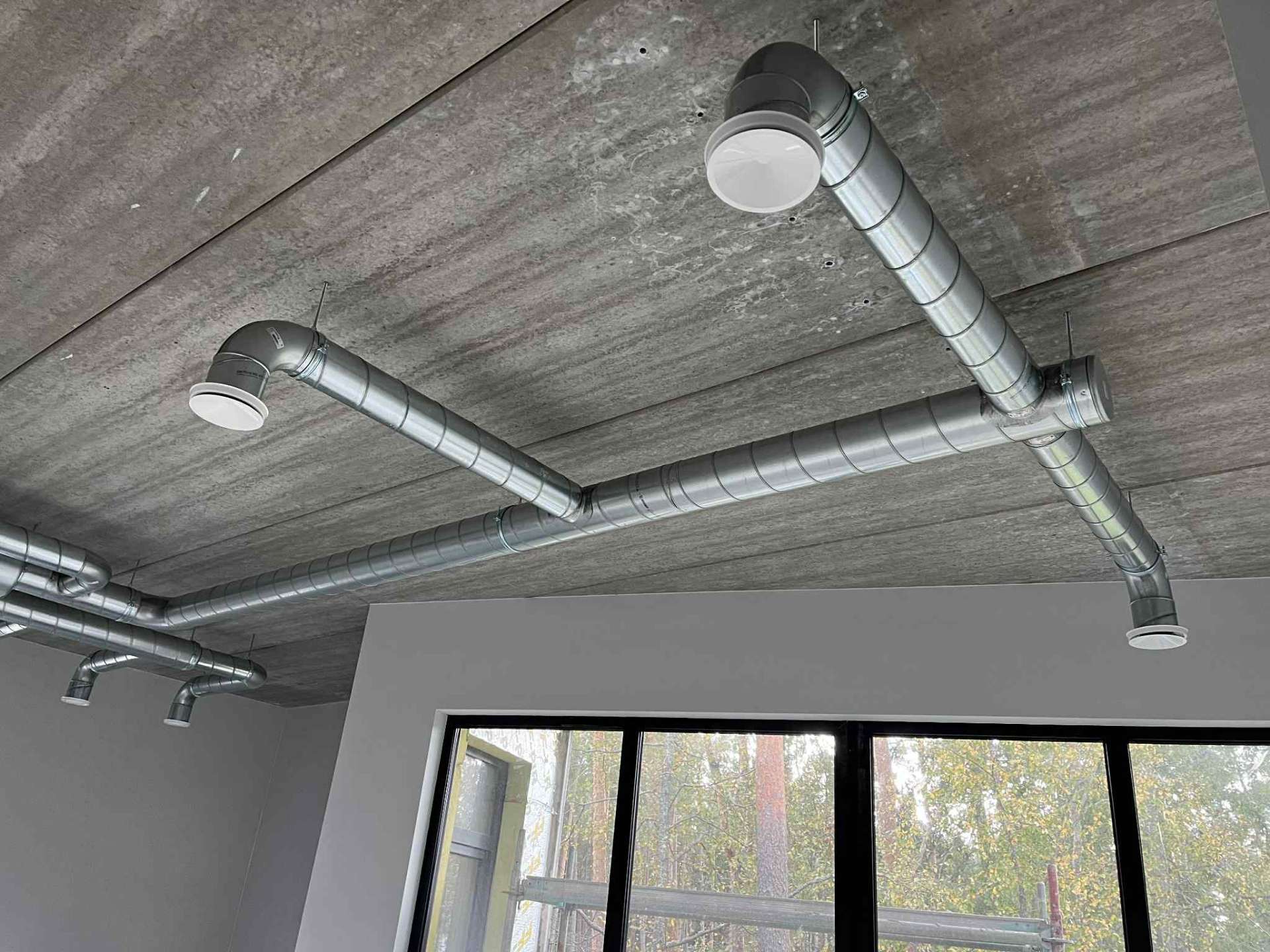
- Installation and commissioning – ductwork, unit, air volume adjustment.
- Maintenance – filter replacement and periodic inspection.
Maintenance: How does the system remain efficient?
Ventilation requires regular maintenance. The most important tasks are replacing filters every 3–6 months and inspecting the system. A dirty filter reduces airflow, increases energy consumption, and degrades air quality. See: ventilation maintenance and duct cleaning.
Apartment vs. Private House
The solution depends on the building type. In a private house, a central heat recovery system is usually installed – see private house ventilation. In an apartment, room-based recuperators are often used – see apartment ventilation.
Frequently Asked Questions
How often should the ventilation filter be changed?
Typically every 3–6 months, depending on the environment and filter type. More frequently during pollen season.
Is ventilation with heat recovery worth it?
Yes – the unit recovers up to 85–90% of the heat from the exhaust air, which significantly reduces heating costs. In tight new homes, it's the only sensible solution.
Can ventilation be installed in an existing house?
Yes, it can. During renovation, hiding the ductwork is easier, but a system can also be installed in a completed house. See ventilation renovation.
How long does installation take?
Installation of a typical private house system takes a few days, depending on the house size and construction stage.
KoduVent is a ventilation company based in Tallinn, which has completed over 500 installations since 2015. Ask for a free consultation.
KoduVent
Koduvent is an Estonian ventilation company that has installed, maintained and designed ventilation systems for thousands of homes, apartments and commercial buildings over more than 20 years.
Request a free consultation
We will help you choose the best ventilation solution for your building — we reply within 24h.